Tim Wilson Studio develops site-responsive artworks from field research, photography, sound and environmental observation, translating the character of a place into paintings, generative visual and sonic systems, and architectural installations.
Project:
Invisible Forces
Organic Networks x Urban Interference
Digital installation proposal
Generative image and sound
Dimensions variable
2026
Concept visualization in an imagined architectural setting.
Invisible Forces questions the idea of agency by exploring how our perception of the environment is shaped by unseen systems, chance, and generative processes.
By capturing and transforming the visual and sonic characteristics of a location, then projecting them back into the same environment, the work creates uncertainty around what is real, what is constructed, and who or what is in control.
Who is the author of this experience? The artist who establishes the rules, the systems that generate the work, or the environment itself?
The viewer encounters familiar surroundings that appear fluid, unstable, and constantly evolving, creating a tension between beauty, immersion, and surveillance.
At a time when algorithms and automated systems increasingly shape how we experience the world, often without our awareness or consent, Invisible Forces invites viewers to question the invisible structures influencing their perception and their own agency within them.
Project:
Invisible Forces
Digital installation proposal
Generative image and sound
Dimensions variable
2026
Concept visualization in an imagined architectural setting.
Invisible Forces explores how unseen forces might become visible through image, movement, and sound. Developed from painting and photographic research, the work translates organic textures and structures into evolving compositions at an architectural scale.
Conceived for large-scale digital surfaces within architectural interiors, the proposal investigates how generative imagery can interact with the geometry, materials, and atmosphere of a space.
The visualization presents a proposed installation within a contemporary architectural environment.
Installation proposal
Generative video, spatial sound, and layered scrim surfaces
Dimensions variable
2026
Project:
Vertical Falls
Virtual maquette showing the proposed installation.
Vertical Falls is an installation proposal developed from a rule-based oil painting study. It translates six states of density into moving imagery that gathers, erodes, disperses, and reforms across a proposed structure of vertically stacked, semi-transparent screens.
The proposed installation combines generative imagery with spatial sound, extending the painting’s exploration of accumulation and collapse into a physical environment. Viewer movement would influence the image and sound, allowing visitors to affect the work as they move around it.
Project:
Afterimage Field
Installation proposal
Projected imagery, semi-transparent scrim, and proposed movement tracking
Dimensions variable
2026
Virtual maquette showing the proposed spatial arrangement.
Afterimage Field is an installation proposal exploring how movement can leave a temporary trace in a space. Developed from my paintings, the proposed work combines curved, semi-transparent screens with floor projection, extending painted forms into an environment visitors could move through.
Visitor movement would generate visual traces that linger, overlap, and gradually fade. As new paths intersect with earlier ones, the imagery would accumulate and disperse, allowing the space to hold a changing record of those who have passed through it.
Project:
Three States
Studio research and prototype development
Generative imagery, body tracking, and sound
2025
Virtual maquette exploring a possible installation format.
Three States is a studio research project exploring how bodily movement can shape generative imagery and sound. Through body-tracking and audio-reactive experiments, I investigate three conditions--order, instability, and degradation as a foundation for future installation proposals.
The research asks how an environment might retain traces of movement over time, allowing earlier actions to influence what follows. Studio tests explore responsive behavior, while the virtual maquette considers how the work could occupy a larger architectural space.
Studio test exploring body tracking and audio-reactive imagery.
Project:
Orbital
Studio research and concept development
Moving-image studies, sound, and virtual maquettes
2025
Virtual maquette exploring a possible immersive environment.
Orbital began as an independent exploration of how the audiobook Orbital by Samantha Harvey could become an immersive spatial experience. Early studies considered how voice, sound, and moving imagery might extend listening into the surrounding architecture.
The project subsequently broadened into a meditation on space, repetition, and cyclical movement. Virtual maquettes and moving-image studies explore curved surfaces, planetary forms, and layered sound as elements of a possible installation.
Virtual maquette exploring moving imagery across curved and suspended surfaces.
Moving-image study exploring repetition, depth, and visual rhythm.
Planetary motion study using hand-painted textures.
Projection study exploring layered moving imagery on a triangular surface.
Project:
Memory Machine
Field research and spatial concept development
Field recordings, photography, moving imagery, and virtual maquette
2024
Virtual maquette exploring an immersive environment developed from field material collected in Maria Hernandez Park.
Memory Machine is a studio research project exploring how the sounds, imagery, and forces encountered in a public space could become the starting point for an immersive experience. Working in Maria Hernandez Park, I collected field recordings and photographs, observing the movements, rhythms, and textures that give the place its character.
These materials became the basis for experiments with moving imagery, sound, and a virtual environment. The project explored how an experience could evoke a place through fragments and relationships, extending beyond a literal reconstruction. It helped establish an approach that continues through my current work: beginning with observation and collection, then developing that material into paintings, digital studies, and installation proposals.
Photographic study of Maria Hernandez Park, forming part of the source material for Memory Machine.
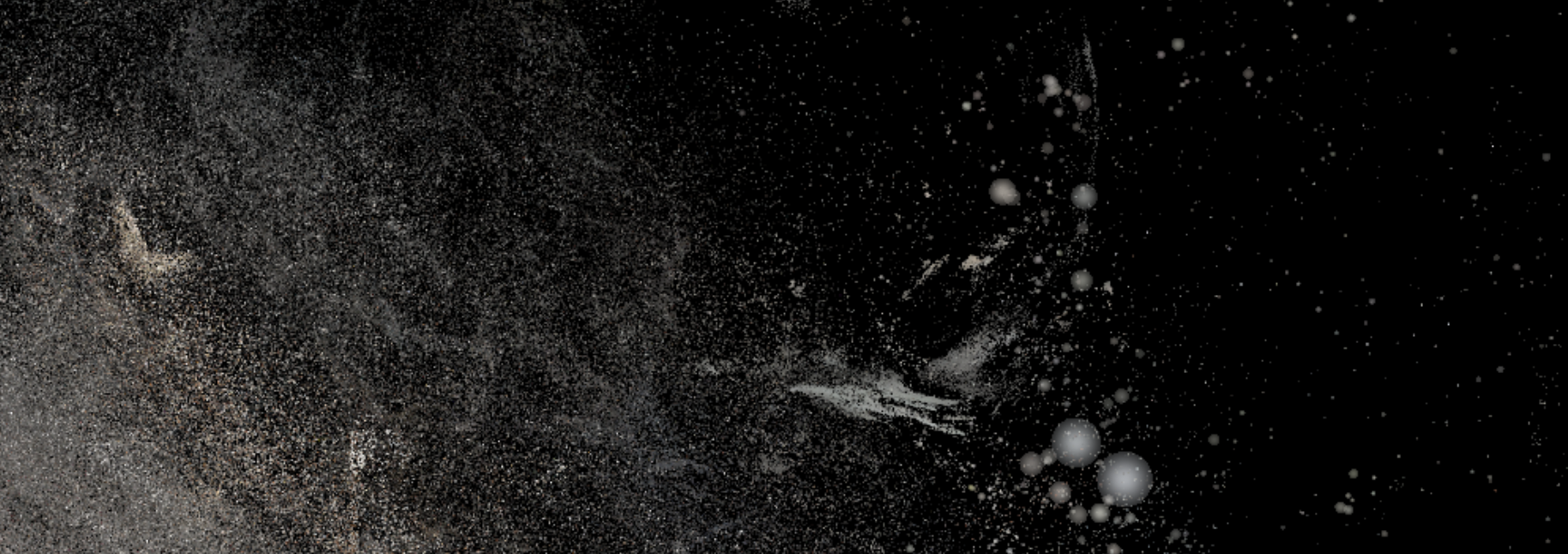
Digital study transforming the park’s photography into moving textures for a possible installation.
Project:
NY Tesseract
Studio research and interaction concept
Moving imagery, sound, and virtual maquette
2024
Virtual maquette exploring the scale and setting of a proposed interactive screen installation.
NY Tesseract is a studio research project exploring how visitors could interact with images and memories of New York through a large-scale screen installation. The concept proposes using movement and proximity to reveal, distort, and layer fragments of the city’s imagery and sound.
The research considers how exploring these fragments could resemble the act of remembering: bringing some details into focus while others recede or overlap. The virtual maquette explores a possible architectural setting for the work, with the proposed interaction system still to be developed and tested.